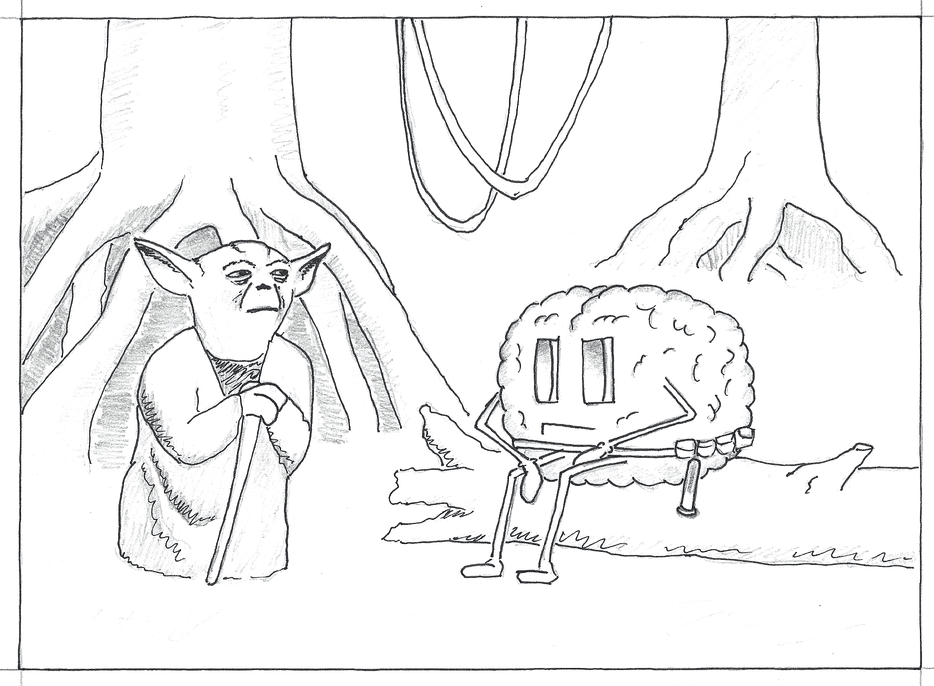
Day 10: Somatic Tracking II: Anxiety Strikes Back
For as long as he could remember, Nathaniel Branden wanted to be a doctor. While this would be an ambitious goal for most people, Nathaniel had a particularly unique barrier: he had hemophobia – an extreme and irrational fear of blood.
It’s not a good sign when a doctor’s more afraid of giving a shot than a patient is of getting one.
Knowing that he’d need to overcome his fear, Nathaniel took an extreme step: he volunteered to draw blood at Stanford Hospital, three times a week, for two years.
The more he exposure he had to blood, the more his fear began diminishing…and after several months, it had completely disappeared.
Nathaniel Branden went on to get his PhD and became a leader in the self-esteem movement. “Fear and pain,” he said, “should be treated as signals not to close our eyes, but to open them wider.”
The Road Less Traveled
Anxiety is an unpleasant feeling, and most of the time we run away from it. We distract ourselves in whatever ways we can – drinking, smoking, stress eating, living on our phones, checking Facebook twenty times a day, watching reality TV – all to avoid facing the uncomfortable sensation of anxiety.
There are two ways you can deal with a fear – you can habitually avoid it, or you can lean into it and subsequently overcome it.
Somatic tracking is a direct way of confronting your fear. Instead of running from the physical sensation of your anxiety, you’re embracing it.
In the following clip, I’m talking with Jane, a chronic headache sufferer. We’re halfway through a somatic tracking exercise…when she suddenly starts feeling pain in her head. Given her history of headaches, she naturally panics. But instead of running away, she leans in to the sensation. Watch what happens:
Unlearning Fear
TMS arises in those with a strong mindbody connection. Not everyone can generate such powerful physical sensations with their brain.
My favorite analogy for this comes from Star Wars: “The Force” is stronger in some than others.
And fear is the path to the dark side.
If you can change your relationship with fear, you can develop new neural pathways and deactivate your brain’s danger signals.
Like Yoda said, “You must unlearn what you have learned.”
When you attend to the physical sensations in your body with objective curiosity, you’re leaning into the fear. Your anxiety might increase, decrease, or move around. Maybe pain will arise, or maybe you’ll start to feel an emotion.
Whatever happens, all you need you to do is watch. Simply by attending, you’re no longer running, and you’re teaching your brain to feel safe.
Attending to Yourself
When I was a sophomore at UCLA, the Dalai Lama came to speak at our school. I was an economics major at the time, and had little interested in psychology, but it was only a block away from my dorm, so I went out of curiosity.
Along with 17,000 others, I piled into in Pauley Pavilion to hear him speak. It was incredible. He talked about the barriers to self-love, the pursuit for inner peace, and the importance of disciplining the mind.
At one point he spoke about meditation. “People I talk to in Beverly Hills,” he said, “meditate for only an hour a day…” And then he started laughing.
“
Only?” I thought.
I left that night, thinking two things:
1. What the hell was I doing majoring in economics?
2. The Dalai Lama has some seriously high expectations when it comes to meditation.
It wasn’t until years later that I realized what he meant. If you attend to yourself for only an hour a day, then you’re neglecting yourself for the other 14. The goal is to attend to yourself all the time.
Somatic tracking involves attending to the physical sensations in your body with objective curiosity.
The goal isn’t to attend to yourself when your pain flares up or for a set amount of time, the goal is to attend to yourself on a moment-to-moment basis: while you’re talking, and while you’re driving, and while you’re typing an email, and while you’re reading this very sentence…
Of course, unless you’re gunning for spiritual enlightenment, you’re not going to reach that goal. I certainly haven’t.
But the more you practice, the more it can become a default setting. And you’ll develop a new set of neural pathways for mindfully attending to your internal state.
All you need to do is check in, and see what’s going on.
![[IMG]](http://www.tmswiki.org/image/brain.png)