• Alan has completed the new Pain Recovery Program. To read or share it, use this updated link: https://www.tmswiki.org/forum/painrecovery/
  • Welcome to the new TMS Wiki server! Things aren't finished yet: email is not set up, so notification and password-reset emails don't go out, and new registrations are paused until email is installed. Details and updates are in this thread (click here). Locked out? Email tmswikisignups@gmail.com from the address where you receive TMS Wiki notifications.

New Program Day 2: The Nature of Pain

I wonder if you could say a little more about how the environment we live in isn't the one we were wired for? As it seems we have replaced the fear of predators with other fears (such as job interviews, etc). If we have just replaced one set of fears with another, then why does this cause us so many problems? So many people now live in constant stress, but how is this different from some animals in nature, for example squirrels, who seem constantly on high alert to any noise or movement. How are these animals able to cope with constant stress, whereas we can't?

I also had a question about safety - and have read some of the other posts with interest, as I too, have had experiences in my childhood which have left me with constant anxiety and on high alert, which now seems part of my nervous system. It's hard to believe that this can be changed, as I have tried many kinds of therapy for most of my life. Though I would very much like to change this! I have never felt safe my entire life, and don't even know what this would feel like.

I look forward to your next post, and really hope that this system can help.

Ha, you're right that we replaced some stresses with other as we moved from tribal societies to global civilization. In the past we had more of the external dangers from the environment, but increasingly people were able to defend themselves by predicting weather, improving weapons against predators etc. I think in the past we were more in touch with our natural needs and instincts, and the slow pace of "cultural progress" allowed us to adapt to changes with skills that we learnt. Nowadays a lot of people feel one step behind everything (constantly rushing with overwhelming demands of our jobs and social expectations, frustrated about things beyond our control like traffic, terrorism threat, politicians whom we didn't choose, endless technological upgrades requiring us to conform or perish...). As there is no one we can blame and direct our aggression towards we get angry at ourselves for "not being enough", and we never get a real outlet for our emotions to dissipate. This is different from wild animals who know exactly whom to fear, and after they escape an attack they will release the fear from their bodies by shaking (see TRE by David Berceli).

Regarding safety I have the same problem, not only from childhood but also young adulthood. I'm constantly working through them but it's not easy to feel relaxed when you never felt safe to do so. Some people don't respond to therapy, and there could be a mismatch between client and therapist and the type of therapy... I guess the best way is to start with current stressors and try to track their root cause to something in your past, and release their emotional charge through your favourite mind-body technique (like journaling, EFT, hypnosis, whatever). We'll probably learn valuable tools in this program later. Important is that you make it your own and enjoy using the technique. Gradually you will feel more resilient and confident about yourself and life events will no longer be so overwhelming.
 
Good question, Carbonevo. The very act of repression is the brain reacting to these emotions as if they were dangerous. Repression itself is a psychological response to a perceived threat. One of the primary interventions Dr. Sarno suggested was confronting and overcoming the fear of the pain. It's truly amazing that he had the insight to understand all of this decades before the neuroscience came along to back it up.

Regarding your other question, perceived danger is relative, and not always a direct reflection of actual danger. Although technically, mountain climbing is more dangerous than sitting in your office, your brain might not see it that way. When your working, there are many different perceived threats: pressure (both self-imposed and external), fear of failure, possibly anger that you have to be doing tasks you don't want to be doing, etc.
 
Good question, Carbonevo. The very act of repression is the brain reacting to these emotions as if they were dangerous. Repression itself is a psychological response to a perceived threat. One of the primary interventions Dr. Sarno suggested was confronting and overcoming the fear of the pain. It's truly amazing that he had the insight to understand all of this decades before the neuroscience came along to back it up.


If I may chime in with a quote from 'The MindBody Prescription'. Sarno is writing on the subject of conversion disorders and suggests they have the same underlying processes as TMS. It reads as follows:

"The crucial point is that the symptoms are not the result of damage or disease of specific body parts. They are perceived as weakness, pain, numbness or blindness only because the appropriate brain cells have been fired off...one set of brain cells is stimulated by other brain cells, in this case the stimulating cells are those having to do with powerful unconscious emotions...What's important is not the method the brain uses to produce symptoms; it is the fact that the brain is inducing symptoms...keeping Dr. Perts* work in mind...it is only difficult to explain at a fundamental level, the level of the black box."

The accompanying diagram in the book begins with The Limbic System and breaks down the process, passing through "the black box" through activation of the hypothalamus and onto the Autonomic system. At this point Sarno's own diagram says TMS happens.

What neuroscientists and pioneers like Schubiner and Alan Gordon are doing is simply explaining the black box that Sarno described. They have gained access and are exploring the magnificence and mystery of it and are then translating it into recovery and healing.

I view the psychological and neuroscience/behavioural approaches like this: I was born in the year the UK went metric however I quantify weight, volume and distance in Imperial Measures (such as stones, pints and miles) yet money I quantify as Metric (pounds and pence). But they are measuring the same thing in different ways. It doesn't matter whether you favour the more emotive and psychological models or if you prefer the more scientific and neurobiological ones. They are maps describing the same territory. All that matters is that you favour the one that works best for you.

Many people find the repressed emotion model incredibly confusing and messy. Other people adore the mystery, the poetry, the Old School nature of it.

Others prefer the clarity and science-backed nature of more contemporary models. They seem to make more sense. They are easier to relate to.

(You can of course pick and mix but I would suggest you need a solid grounding and understanding of both approaches to do that with confidence).

The mythologist Joseph Cambell once said the way to sainthood was to choose a path of faith and stick to it. The same may be said here. Choose the path that resonates most strongly for you, stick to your guns and come up smiling.

*Candace Pert
A simple search of the forum/wiki will yield more information.
 
Last edited:
Perfect post plum!
Thank you for clarification Alan.
Basically both models dont matter as they explain the only thing that the brain is trying to acheive: PREOCCUPATION by inducing fear from the symptoms.
Take that away and you would have killed the behavior. The pain will disappear as it won't serve any purpose anymore.
 
Perfect post plum!
Thank you for clarification Alan.
Basically both models dont matter as they explain the only thing that the brain is trying to acheive: PREOCCUPATION by inducing fear from the symptoms.
Take that away and you would have killed the behavior. The pain will disappear as it won't serve any purpose anymore.

Exactly. Isn't clarity a beautiful thing. One of Alan's shining qualities is his lucidity.
 
An excellent question.

Maybe a good place to start is to acknowledge that this concept is alien to you and why this might be so. What are your experiences of care and kindness? Can you readily name gentle people in your life? Are there people who touch your heart? Can you feel those tender feelings? Can you imagine others feeling that way toward you? If not, why not? What judgements do you have around your self-worth and self-esteem? Issues to ponder...


Essentially to self-soothe means to discover and embrace ways and means that calm fraying nerves. It is the realisation that we have never really learned to look after ourselves emotionally and instead we intellectualise, living from the head and not the heart. Many of us initially veer into self-destructive behaviours, such as booze, food, casual sex, shopping, over-exercising and other deadening, zone-out practices before realising that such actions take more than they give. The initial high is not worth the heavy, hard-hitting low. Invariably these behaviours worked once and maybe for a while especially when we were young but the results are ever diminishing and we finally must face ourselves.

Initially being kind to yourself means to go easy on internalized value judgements around the failure of aforementioned coping strategies. It means having the courage and kindness to go beyond knee-jerk reactions and it means forgiving yourself for the events and experiences that led you to become so emotionally shut-down that you no longer even recognise how emotionally flat-lined you are.

Then you begin to switch wires and substitute destructive behaviours for nurturing ones.

I am sure you instinctively know what makes you feel good deep into your bones. These are the things to focus on.

For me they are the small and simple. Cuddling up to my partner. Stroking a friendly dog. An early night. Cloudwatching. And most of all Nature. The forest, sun set, full moon, a powerful storm...moments that take us out of our small selves and connect with something bigger, something enduring.

Self soothing means caring for yourself, your needs as a human being. It means learning how to feel your emotions in the moment and not be thrown a curve ball. It means opening up not closing down. It is Love not Fear. It is the practice and thinking of becoming centred and at peace with who you are and then loving the hell out of yourself.

Thank you Plum for asking the question - I needed to hear both the question and the answer. I didn't know I didn't know.
 
Day 2: The Nature of Pain

To better understand the treatment techniques we’ll be going over in the coming days, here are two basic premises you should know about pain.

Premise 1: Pain = Danger

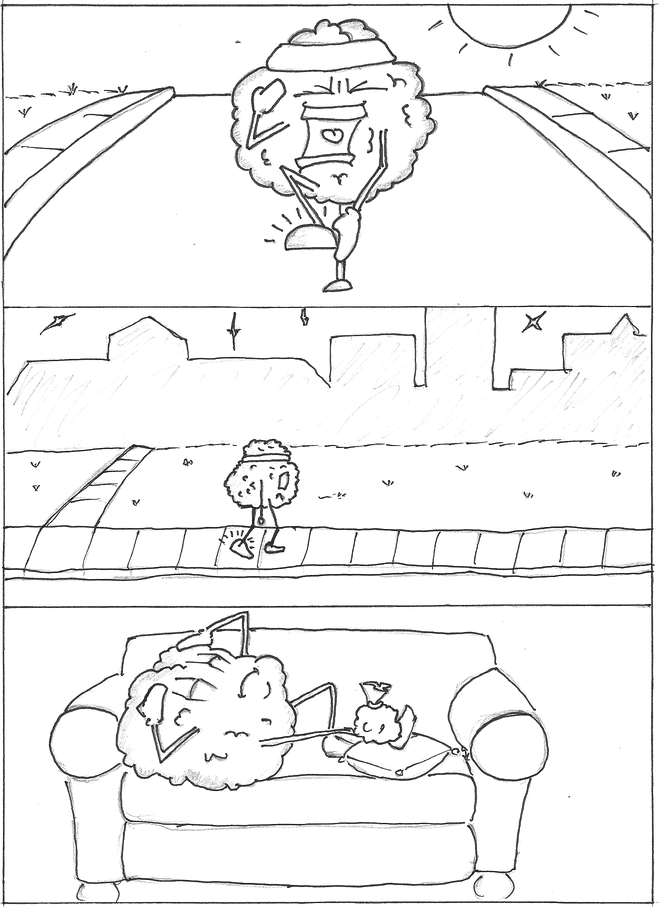
Imagine that you're out on a run. You're listening to music, enjoying the early morning breeze, and pondering the mysteries of nature. Suddenly you trip over your shoelace, come down awkwardly on your left foot, and feel a sharp twinge. You've sprained your ankle. Frustrated, you limp home, wondering how bad the swelling is going to be.

sprainedankle.png


As awful as it feels, pain is meant to help us. It’s our brain’s way of saying: “You are at risk of causing tissue damage, kindly back off until we heal.”

Without pain, you'd have no idea that you sprained your ankle, you'd continue running, and you'd injure yourself even worse.

Put simply, pain is our brain's way of screaming: DANGER!

Premise 2: Our brains are not perfect

Throughout human history, our brains have developed the capacity to achieve some remarkable feats. We’ve unlocked the secrets of DNA, we’ve discovered the boundaries of the universe, and we’ve invented 72 distinct flavors of Oreos (Nabisco, you had me at “triple double chocolate mint.”)

But our brains are not perfect. In fact, sometimes they can get downright confused.

Over millions of years of evolution, we have developed different signals to warn us of danger. Pain warns us of causing additional tissue damage, fatigue lets us know we need to rest, even hunger warns us that we need to refuel with food. And usually these signals work out great.

When you’re in pain, you rest the injury so it can heal. When you’re fatigued, you take a nap so that you can recover. When you’re hungry, you have a glass of milk and some Berry Burst Ice-Cream Oreos.

But, our brains never developed a system that can perfectly distinguish one type of danger from another. Oops.

This means that sometimes our danger signal can get activated by mistake.

Let’s look at anxiety as an example. Anxiety is a danger signal that developed so we could run faster or fight harder when we’re faced with a physical threat.

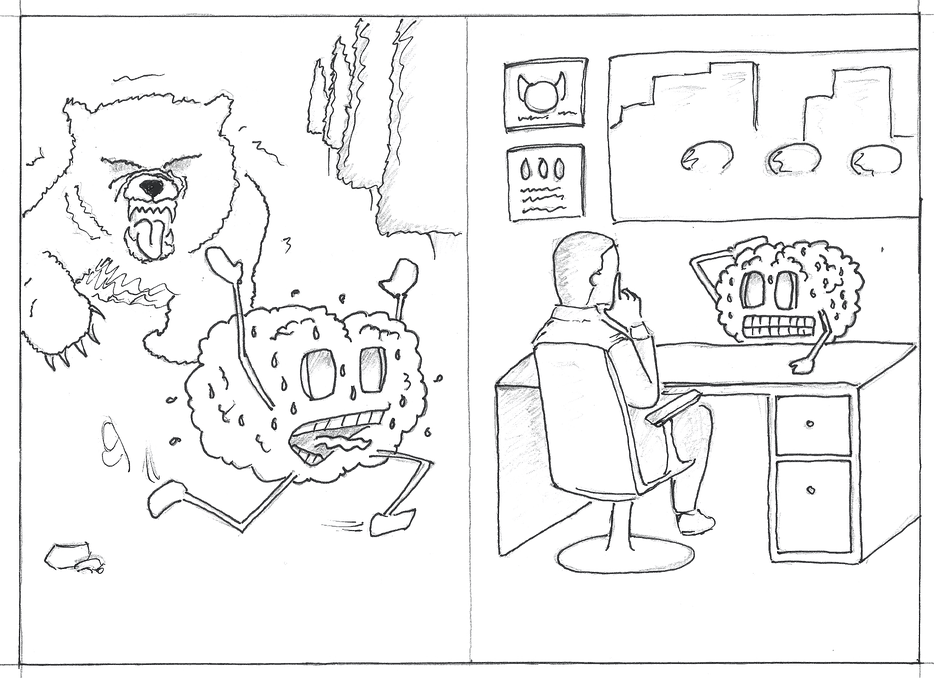
Anxiety is great when a bear is chasing you, but it’s not so helpful in the middle of a big job interview.

fightorflight.png


And since the brain can’t always distinguish one type of danger from another, it can respond to a psychological danger (I really hope I don’t blow this job interview) as if were a physical danger (I really hope this bear doesn’t eat me).

This is why we can develop anxiety even in situations where our lives aren’t in danger. Our brains are misinterpreting the nature of the threat, and activating the wrong danger signal.

To see some examples of other psychological dangers (as well as how they can develop) watch the following clip:


Developing TMS

You may be asking yourself, what does any of this have to do with pain?

Remember, pain is a danger signal too. So when we sense a psychological danger, our brains can misread the situation and respond with pain. It’s simply another case of our brains activating the wrong danger signal. This is how we can develop pain even if there’s no actual tissue damage.

Isn’t neuroscience fun??

Here’s a story to illustrate these concepts.

One night during my second year of grad school, I was studying for a big final exam. I needed to do well so that I could get good GPA so that I could get a great job so that I could make a lot of money so that I could pay off my grad school loans (ah, the circle of stress…)

Out of nowhere, I developed terrible back pain.

Let’s look at what happened. There was a psychological stress (If I don’t do well on this test, I’m going to end up poor, unemployed, and living with my parents.) My brain sensed danger, it misinterpreted what the actual threat was, and it flipped the wrong danger signal: pain.

And that’s how we can develop pain even when there’s no injury.

TMS Treatment

Assuming that you have TMS, there are two main goals to overcoming your symptoms.

1. Teach your brain that the pain is not dangerous

2. Teach your brain that the psychological stressors that it learned to fear (anger, sadness, confrontation, intimacy, etc.) are not actually dangerous.

For the next three weeks, we’re going to work on achieving these goals. You’re going to learn new techniques to confront your fear, overcome psychological barriers, and work toward deactivating your danger signals.

In other words, we’re going to try and give your brain the thing it needs most: a feeling of safety.

[​IMG]
The animated videos are fun and helpful! Thank you so much Alan, for your honesty about your own TMS and for offering this to us for free so we can achieve a pain-free life.
I first found this TMSWiki, Feb '17 and got rid of 19 years of overall (tender to the touch only) chronic low back and hip pain within two weeks after I read Dr. Sarno's books and tons of the pages here on this site. Now, it is six months later and I see the fear creeping back in as I do more and more physical exercise and work. AND I developed sharp left shoulder pain that comes and goes, so I know it's TMS.

So I am back here, re-educating myself to let the old pain and fear habits go. I am super excited to re-train my brain because I am having so much fun in my life now. Just imagining how much more I will enjoy everything as the fear of pain goes away, keeps me going! You and all the people who have contributed to this site are beacons of HOPE. Thank you.
-butterfly_queen
 
My love, go to Nature where you can and when you can't give your tears and smiles to the sky. Cloud-watch, moon bathe...small moments of reconnection to the home and healing that is your birthright. You will recover.
Plum, your lovely response may have answered a question I've had recently. Last Monday I 'injured' my lower back doing dead-lifts in the gym. I was with my lovely coach, who isn't a drill sergeant, meaning, she's not a hard taskmaster and I am very fond of her and who is in fact suggesting that we reduce my workouts to two days a week instead of 3, given that I've been having some issues with training causing - not relieving - anxiety, and also iron levels dropping (which seems to happen whenever I exercise, these days). Anyway, she got me to do a deadlift, and although I've lifted that weight before, as I hadn't been training recently, the moment I picked it up in the manner she was asking me too, I felt overloaded. Deadlifts require you to move quickly so once you've picked it up, you've sort of done it, too late! I let out a large groan at the effort. I was taken by surprise at how heavy it felt and wheeled around after I'd dropped it again. I recall now feeling a fleeting, very fleeting, sense of both terror and rage, but that's only because of what happened next caused me to reflect on this, looking for answers.
Within a minute my back had gone into a severe spasm and locked up. I haven't had lower back problems for a while, but here it was. I stopped training for the week. I didn't want to load my back with barbells and do deadlifts. It hurt to do anything. And I felt huge relief about not going. The pain drove me up the wall and all week I also felt very glum and depressed, but also glad not to have to work out because then I could attend to some things I'd been wanting to attend to, and up until then, exercising had been getting in the way. I recognised this a possible motive of my psyche - buying me some time to myself.

I kept wondering whether it was TMS or whether that deadlift was just too heavy for me and I had injured myself? That barbell was heavy and it caught me by surprise. It sure felt like that was the case. Anyway, pain and lumps in my back, like a brick was in there, continued for the week. I was glum. But kept telling myself it was probably TMS though had a million reasons why, couldn't pick up what caused it.

And then on Saturday I got a call for a wildlife rescue. I belong to a wildlife rescue organisation and I haven't done anything for months. I was just about to do a painting when I saw the request. I could have left it and someone else would have responded, but guilt and my conscience got to me. I HAD to rescue the baby bird, I couldn't rest otherwise. Then I got angry and annoyed with myself and the situation - about feeling like I had to rescue the bird, because no one was putting that pressure on me except me, and I was all ready to do a painting. My anxiety level went through the roof because of the conflict and because I felt selfish to do painting when a bird needed to be rescued. The chances were had I left it, someone else would have picked up the callout, there are many volunteers like me, but I just felt like I had to. The interesting thing is I hadn't responded to a callout for over two months (due to a house move, I had to focus on that), now, all of a sudden, I have to get this bird. Admittedly, a rescue would also take me away from isolation and the stress I was feeling over my painting (it isn't going the way I hoped it would).

I messaged that I would attend the case, and as I was gathering my things to get in the car, my anxiety was burning holes in me almost, and also anger, rage was foaming up in me. I was aware of this at the time and kept wondering why I was feeling so much anxiety, rage and conflict all at the same time. The back pain became searing. I got in the car and drove to the location, where the bird had fallen out of the nest. The 'chick", I should say, was not small - it was a baby ibis, about the size of a chicken but with very long legs and a huge hook-bill. This was one of the reasons for the anxiety. I had rescued smaller birds before, but not ibis. I had been a bit worried about how big he would be or if he could bite with that large bill. Well, he was adorable. One look at the poor bird at the base of the palm tree with his whole family metres up the top, he shivering on the ground, a sitting duck for any dog or cat wanting a snack, and I felt such compassion toward him. We played chasey around the tree like a Warner Bros. cartoon. The baby bird, gangly long legs, running round and around the base of the palm tree , me ambling after it, yellow towel held aloft, ready to drop over him. First running one way, then the other, then playing peek a boo around the tree, trying to outsmart each other. Fortunately he wasn't all that fast, or clever, really, to keep going in circles like that. I caught him and bundled him into my rescue basket, but not before I'd managed to give him a quick cuddle (he did not struggle) and soothe him. Actually I think it was me I was soothing. He was ugly cute, a heart-snatching look only baby birds can achieve. I fell in love and kept telling him how lucky he was, because he was going to be one bird who makes it. I phoned the coordinator for the drop off so the ibis could go into human foster care and be rehabilitated (we cannot reunite with parents; palm trees are too tall and dangerous so we take these birds into care rather than kill our volunteers).
I drove home and then I noticed, my back pain had greatly diminished. What had happened? I was angry with the whole rescue situation beforehand, for taking myself away from my art. If anything, the pain should have been worse! And I wondered, was it that I had gotten out of the house (finally)? Was it simply the distraction of doing a rescue that took my mind off it? Or was it the baby bird itself, seeing him, holding him, helping him - which I felt really good about. I don't know. There were so many factors involved and I was analysing them to death. I suddenly didn't feel so much regret about not getting any painting done, because I'd done a greater thing that mattered more, in the scheme of things. I'd helped save a little life and this made me feel suddenly worthwhile for a change.

But your post about nature spoke to me, and I wonder if it was the baby bird, who brought up so much warmth in me, and gave me happiness even for the few minutes I had him, had helped my back pain.
 
Plum, your lovely response may have answered a question I've had recently. Last Monday I 'injured' my lower back doing dead-lifts in the gym. I was with my lovely coach, who isn't a drill sergeant, meaning, she's not a hard taskmaster and I am very fond of her and who is in fact suggesting that we reduce my workouts to two days a week instead of 3, given that I've been having some issues with training causing - not relieving - anxiety, and also iron levels dropping (which seems to happen whenever I exercise, these days). Anyway, she got me to do a deadlift, and although I've lifted that weight before, as I hadn't been training recently, the moment I picked it up in the manner she was asking me too, I felt overloaded. Deadlifts require you to move quickly so once you've picked it up, you've sort of done it, too late! I let out a large groan at the effort. I was taken by surprise at how heavy it felt and wheeled around after I'd dropped it again. I recall now feeling a fleeting, very fleeting, sense of both terror and rage, but that's only because of what happened next caused me to reflect on this, looking for answers.
Within a minute my back had gone into a severe spasm and locked up. I haven't had lower back problems for a while, but here it was. I stopped training for the week. I didn't want to load my back with barbells and do deadlifts. It hurt to do anything. And I felt huge relief about not going. The pain drove me up the wall and all week I also felt very glum and depressed, but also glad not to have to work out because then I could attend to some things I'd been wanting to attend to, and up until then, exercising had been getting in the way. I recognised this a possible motive of my psyche - buying me some time to myself.

I kept wondering whether it was TMS or whether that deadlift was just too heavy for me and I had injured myself? That barbell was heavy and it caught me by surprise. It sure felt like that was the case. Anyway, pain and lumps in my back, like a brick was in there, continued for the week. I was glum. But kept telling myself it was probably TMS though had a million reasons why, couldn't pick up what caused it.

And then on Saturday I got a call for a wildlife rescue. I belong to a wildlife rescue organisation and I haven't done anything for months. I was just about to do a painting when I saw the request. I could have left it and someone else would have responded, but guilt and my conscience got to me. I HAD to rescue the baby bird, I couldn't rest otherwise. Then I got angry and annoyed with myself and the situation - about feeling like I had to rescue the bird, because no one was putting that pressure on me except me, and I was all ready to do a painting. My anxiety level went through the roof because of the conflict and because I felt selfish to do painting when a bird needed to be rescued. The chances were had I left it, someone else would have picked up the callout, there are many volunteers like me, but I just felt like I had to. The interesting thing is I hadn't responded to a callout for over two months (due to a house move, I had to focus on that), now, all of a sudden, I have to get this bird. Admittedly, a rescue would also take me away from isolation and the stress I was feeling over my painting (it isn't going the way I hoped it would).

I messaged that I would attend the case, and as I was gathering my things to get in the car, my anxiety was burning holes in me almost, and also anger, rage was foaming up in me. I was aware of this at the time and kept wondering why I was feeling so much anxiety, rage and conflict all at the same time. The back pain became searing. I got in the car and drove to the location, where the bird had fallen out of the nest. The 'chick", I should say, was not small - it was a baby ibis, about the size of a chicken but with very long legs and a huge hook-bill. This was one of the reasons for the anxiety. I had rescued smaller birds before, but not ibis. I had been a bit worried about how big he would be or if he could bite with that large bill. Well, he was adorable. One look at the poor bird at the base of the palm tree with his whole family metres up the top, he shivering on the ground, a sitting duck for any dog or cat wanting a snack, and I felt such compassion toward him. We played chasey around the tree like a Warner Bros. cartoon. The baby bird, gangly long legs, running round and around the base of the palm tree , me ambling after it, yellow towel held aloft, ready to drop over him. First running one way, then the other, then playing peek a boo around the tree, trying to outsmart each other. Fortunately he wasn't all that fast, or clever, really, to keep going in circles like that. I caught him and bundled him into my rescue basket, but not before I'd managed to give him a quick cuddle (he did not struggle) and soothe him. Actually I think it was me I was soothing. He was ugly cute, a heart-snatching look only baby birds can achieve. I fell in love and kept telling him how lucky he was, because he was going to be one bird who makes it. I phoned the coordinator for the drop off so the ibis could go into human foster care and be rehabilitated (we cannot reunite with parents; palm trees are too tall and dangerous so we take these birds into care rather than kill our volunteers).
I drove home and then I noticed, my back pain had greatly diminished. What had happened? I was angry with the whole rescue situation beforehand, for taking myself away from my art. If anything, the pain should have been worse! And I wondered, was it that I had gotten out of the house (finally)? Was it simply the distraction of doing a rescue that took my mind off it? Or was it the baby bird itself, seeing him, holding him, helping him - which I felt really good about. I don't know. There were so many factors involved and I was analysing them to death. I suddenly didn't feel so much regret about not getting any painting done, because I'd done a greater thing that mattered more, in the scheme of things. I'd helped save a little life and this made me feel suddenly worthwhile for a change.

But your post about nature spoke to me, and I wonder if it was the baby bird, who brought up so much warmth in me, and gave me happiness even for the few minutes I had him, had helped my back pain.

Hello beautiful you,

Thank you for gifting me (us) with this heart-warming experience. I googled for images of a baby ibis and they truly are cute, ugly and adorable, and I can see why you were uncertain about catching the little fella...that is a big beak. So it made me laugh to think of you chasing him and it made me glad that people like you are in the world. My aunt was forever saving creatures from pitiful circumstance and bringing them home to join her menagerie. My personal favourite was the goat. She also had a teeny tiny bird that drove the cat insane but they jumbled along. It makes my heart ache in the moment when I see a distressed bird or animal and think to call her before remembering she died years ago. I like to imagine her at peace surrounded by all the birdies and animals she saved. I feel that same warmth towards you.

I believe true and deep healing is a gestalt. We can tease apart the various elements for insight and application (indeed is this not what @Alan Gordon LCSW is doing for us), but surely we are healed when the web of our life seamlessly marries with the web of all life.

Nature has saved my life in moments when my despair was absolute. There is something in the way the tree tops dance and way the soft wind plays with my hair and the way an ugly little bird can wake the Mother in us...moments that confirm our place in the greater scheme. I believe that is our ultimate homecoming and the surest safety we ever know.

My love and blessings to you dear soul.

Plum x
 
Can i ask you all, why is it that fear results in pain???? Sarno says repressed rage affect ais and that causes oxygen deprivation which rwsults in pain. But what is the mechanism behind fear causing pain?????
 
Can i ask you all, why is it that fear results in pain???? Sarno says repressed rage affect ais and that causes oxygen deprivation which rwsults in pain. But what is the mechanism behind fear causing pain?????

Alan knows a lot more than me, but I think one aspect is that fear causes us to brace for danger (physical tension from bracing) which causes the oxygen deprivation...
 
Alan knows a lot more than me, but I think one aspect is that fear causes us to brace for danger (physical tension from bracing) which causes the oxygen deprivation...

I agree with that as well. I have a hard time understanding it but after reading some of the TMS Recovery Program and this new program I'm starting to get it. I am fearful ALL THE TIME. I observed this morning how I was fearful to brush my hair, to get dressed, to move too much, to move not much enough and so on and so on. But I actually caught myself doing it this morning and thought how silly it was that brushing my hair could effect my whole day. I didn't realize how much fear plays into this until reading all information. I have read Dr Sarno's books, which have helped. But reading the info on this forum has put things in a better perspective.
 
Can i ask you all, why is it that fear results in pain???? Sarno says repressed rage affect ais and that causes oxygen deprivation which rwsults in pain. But what is the mechanism behind fear causing pain?????

In Alan's words from Day 2:

"our brains never developed a system that can perfectly distinguish one type of danger from another...This means that sometimes our danger signal can get activated by mistake...Remember, pain is a danger signal too."

Therefore:

"when we sense a psychological danger, our brains can misread the situation and respond with pain. It’s simply another case of our brains activating the wrong danger signal. This is how we can develop pain even if there’s no actual tissue damage."

Day2 link: http://www.tmswiki.org/forum/threads/day-2-the-nature-of-pain.16429/ (New Program - Day 2: The Nature of Pain)

And from Day 4:

"Pain is a danger signal, and in the case of TMS, the belief that the pain is dangerous is the only thing keeping it going. If you can truly embrace that this pain is not dangerous, it deactivates your danger signal and the pain stops.

If a fire alarm goes off, you’re not focused on turning off the alarm, you’re focused on putting out the fire. The alarm is just the signal.

Likewise, TMS is a danger signal. You don’t need to get rid of the pain, you simply need to address the fear.

Fear is the fuel for the pain."

Day 4 link: www.tmswiki.org/forum/threads/day-4-breaking-the-pain-cycle.16459/
 
Can i ask you all, why is it that fear results in pain???? Sarno says repressed rage affect ais and that causes oxygen deprivation which rwsults in pain. But what is the mechanism behind fear causing pain?????
Here is a link for a video about pain that I think might interest/help you and that has been shared on this site a few times. Lorimer Moseley is quite well known in the "pain" field and his quick 10 minute video is super simple, clear and powerful. I also included a longer version of his video which has more detailed info (24minutes) and one (an hour) by David Butler, who he collaborates with, which is really, really interesting. I find this type of stuff super fascinating. Just copy these links into your browser.
 
Great post, Spunky. Emre, Lorimer Mosely does a great job explaining the relationship between fear and pain. In his book, "Explain Pain", he talks a lot about the physiological mechanisms behind this idea.
 
Alan knows a lot more than me, but I think one aspect is that fear causes us to brace for danger (physical tension from bracing) which causes the oxygen deprivation...
So you mean: fear--> physical tension--> oxygen deprivation-->pain?
Actually fear is trying to help us by bracing but pain comes out as a "side effect" of that bracing is that what u mean?
 
Here is a link for a video about pain that I think might interest/help you and that has been shared on this site a few times. Lorimer Moseley is quite well known in the "pain" field and his quick 10 minute video is super simple, clear and powerful. I also included a longer version of his video which has more detailed info (24minutes) and one (an hour) by David Butler, who he collaborates with, which is really, really interesting. I find this type of stuff super fascinating. Just copy these links into your browser.
Thanks Spunky
 
Grateful this is so clear. After working with TMS and back pain for three years, I feel like I have mastered the first goal -- Teach your brain that the pain is not dangerous
by engaging in a lot of physical activity, tennis, hiking, Pilates etc. I'm not afraid there is anything physically wrong with my back. But I must have some hesitation somewhere, because I still struggle with pain, sometimes to do with benign activities like sitting -- but more often than not, I'm starting to notice it is triggered by relationships and emotions I feel about (Or try not to feel:) life/people/pressures.
So I am hopeful about achieving the 2nd goal -- teaching my brain that psychological stressors are not danger. Thank you.
This is me! Thank you for putting into words what I could not "teaching my brain that psychological stressors are not danger."
 
Back
Top