Your relationship with yourself cannot be built entirely around improvement.

HealingMe

Beloved Grand Eagle
Unfortunately, for all of you, I enjoy inspirational and cheesy quotes.

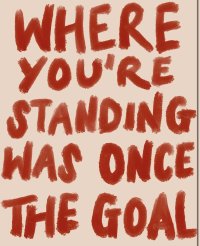
Recently I stumbled upon a quote on social media and it made me stop and think. I wanted to share with you all and especially newer folks who are brand new to TMS work.

“Your relationship with yourself cannot be built entirely around improvement. At some point, you have to become someone you are allowed to enjoy being. You get to be proud of who you are. Present tense.”

Let me know your thoughts.
 

Attachments

  • IMG_8009.jpeg
    IMG_8009.jpeg
    274 KB · Views: 37
Unfortunately, for all of you, I enjoy inspirational and cheesy quotes.

Recently I stumbled upon a quote on social media and it made me stop and think. I wanted to share with you all and especially newer folks who are brand new to TMS work.

“Your relationship with yourself cannot be built entirely around improvement. At some point, you have to become someone you are allowed to enjoy being. You get to be proud of who you are. Present tense.”

Let me know your thoughts.

So important and something I've been working on! I think it goes with the idea also of sometimes you have to make the leap and you'll never feel 100% ready :)
 
“Your relationship with yourself cannot be built entirely around improvement. At some point, you have to become someone you are allowed to enjoy being. You get to be proud of who you are. Present tense.” Let me know your thoughts.


Dr. Sarno in his final book, The Divided Mind (p. 103), wrote that the drive to be perfect or to be good "was either the predominant factor or a very important factor" for 94% of his patients. Later (p. 140), he addressed what to do regarding these personality traits:
"Patients are routinely advised that they need not strive to change their personalities to be successful, since so much is made of the perfectionist and goodist traits as well as other problematic personality characteristics like feelings of inferiority, narcissism, and dependency. One cannot change one's inherent traits, though they can be consciously modified. For example, the person person who feels perpetually compelled to make a doormat of himself and do nice things for others can take stock and decide to curb the tendency."
Modern neuroscience research, which largely postdates The Divided Mind, reveals why Sarno was correct in his clinical observation that personality traits like perfectionism and goodism cannot be changed. They are automatically and unconsciously triggered again and again in our daily lives. What can be done is exactly what Sarno suggested: You can take stock and decide to curb the tendency. You can't curb the tendency unless you first take stock and realize you are in the grip of your perfectionism or goodism or other inherent trait(s). My dominating personality trait is an insidious variation of perfectionism, which I became aware of only with professional help. It affects me almost every day and I have no idea what is happening until I take stock and realize what is going on. Once I realize that, it is easy for me to curb the tendency, though it can take repeated reminders in the particular situation.

"Improvement" does not require changing one's inherent traits. It is impossible to do that because they are deeply buried in the unconscious (or in modern neuroscience terminology, buried in the the brainstem's nondeclarative long-term memory). But it is possible to take stock of what is going on and then curb it. In my case, I regard doing that as something to be proud of.
 
Dr. Sarno in his final book, The Divided Mind (p. 103), wrote that the drive to be perfect or to be good "was either the predominant factor or a very important factor" for 94% of his patients. Later (p. 140), he addressed what to do regarding these personality traits:

Modern neuroscience research, which largely postdates The Divided Mind, reveals why Sarno was correct in his clinical observation that personality traits like perfectionism and goodism cannot be changed. They are automatically and unconsciously triggered again and again in our daily lives. What can be done is exactly what Sarno suggested: You can take stock and decide to curb the tendency. You can't curb the tendency unless you first take stock and realize you are in the grip of your perfectionism or goodism or other inherent trait(s). My dominating personality trait is an insidious variation of perfectionism, which I became aware of only with professional help. It affects me almost every day and I have no idea what is happening until I take stock and realize what is going on. Once I realize that, it is easy for me to curb the tendency, though it can take repeated reminders in the particular situation.

"Improvement" does not require changing one's inherent traits. It is impossible to do that because they are deeply buried in the unconscious (or in modern neuroscience terminology, buried in the the brainstem's nondeclarative long-term memory). But it is possible to take stock of what is going on and then curb it. In my case, I regard doing that as something to be proud of.

I've identified perfectionism in myself, and in certain environments, hobbies, etc., I initially had to consciously guide myself away from behaviors that were sabotaging myself. But over time, I've noticed that sometimes I just stop. I don't have to consciously talk myself out of the behavior or actively curb the tendency. It feels more automatic now.

In my experience, something about my response has changed through the process, trusting myself more, even if I still recognize perfectionistic tendencies in myself.

I also think there's a difference between consciously trying to manage every behavior and practicing a different response until it starts to come more naturally. I'm not suggesting that I've eliminated perfectionism altogether, but I do think there's value in recognizing that our responses can change, sometimes to the point where we don't have to think about them as much anymore.

That's just been my experience, and I think it's important to acknowledge that progress doesn't necessarily have to mean either completely eliminating a trait or consciously restraining it forever.
 
So important and something I've been working on! I think it goes with the idea also of sometimes you have to make the leap and you'll never feel 100% ready :)
Absolutely. Many times I've trying to rationalize myself out of somethng because "it didn't feel right" or I didn't feel the right feeling". But in fact, you don't have to feel ready to start. It develops natural. Action => feeling.

This also brings back memories of when I was initially on the fence about TMS. Is this all legit? What if I don't 100% believe in it but decide to do the work anyway? The brain is amazing because it's so malleable.

I see this from folks who are new to TMS so frequently: “I don't believe in TMS, therefore I can't start this.” But you can tell there is that tiny glimmer of curiousity.

You can cultivate your own belief through experience and curiosity.

Be curious.
 
Thank you for this <3 I definitely see this in myself. When will I be good enough? Now... I am good enough NOW.
I also saw a desperation in myself that I notice in newcomers now, along with a bunch of other patterns. I know that when I first start on a topic I need to temper my excitement and hunger for knowledge because I can get burned out on a topic. When the techniques started to work and my pain was relieved, I went HARD lol I wanted to read all the things, but I realized it was still out of desperation which was fueled by anxiety. The anxiety of the pain returning. I think there is so much value in taking the time to recognize the progress you have made and look back on where you were with gratitude and pride. This is not easy work, but so worth it. Thank you all for the support and encouragement you have given me ><3
 
Back
Top