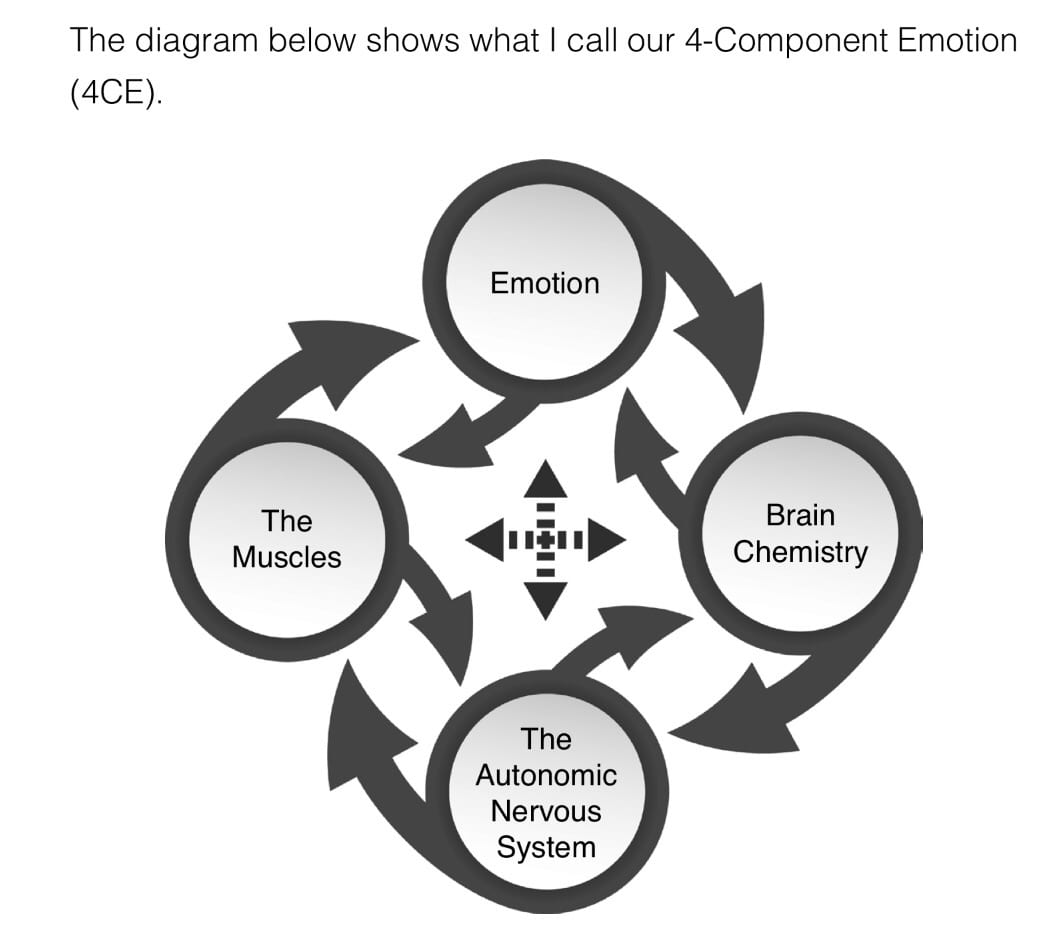
After reading this article I think TMS is perhaps not a repressed emotion, but the stress>pain linkage is an emotion itself. To me, that's a better way to describe it--since experts can't really agree on what an emotion actually is anyway.
I feel sad, I cry. I feel angry, I rage. I feel happy, I smile. I feel stress, I pain. (for me that's upper back and neck pain). These human expressions exist in the body/mind. They exist in the place where the two intertwine.
Therefore, with concentration, we can make ourselves stop crying when we are sad. It can be hard, but it's very do-able. We can calm ourselves when anger arises. And, with practice, we can cease pain when it arises too.
I am a 10+ year Buddhist practitioner and student of Thich Nhat Hanh. And through dedicated practice I have taught myself to understand my anger and to be calm. (I used to be very angry). And with the right insight, TMS programs, teachers, and a dedicated practice, I have crafted a cessation from my chronic neck and upper back pain in much the same way.
So as I might do with crying, when I feel TMS pain I look to my thinking. I explore the situation I'm in. As I get calm and concentrate, I notice the link between situation/thinking/pain. It's not helpful to aggressively attack the problem and "figure it out". When I'm calm and able to concentrate, insight arises. I become available to understand the holistic process that has pain at the end of it. I come to know the co-dependent causes and conditions for the arising of pain. In knowing, it ceases.
Learning how to do that over and over is a skill. I have found that a solid meditation practice is very helpful. Teachers I like are: Pema Chodron, Thich Nhat Hanh, Eckhart Tolle, Jack Kornfield.
I feel sad, I cry. I feel angry, I rage. I feel happy, I smile. I feel stress, I pain. (for me that's upper back and neck pain). These human expressions exist in the body/mind. They exist in the place where the two intertwine.
Therefore, with concentration, we can make ourselves stop crying when we are sad. It can be hard, but it's very do-able. We can calm ourselves when anger arises. And, with practice, we can cease pain when it arises too.
I am a 10+ year Buddhist practitioner and student of Thich Nhat Hanh. And through dedicated practice I have taught myself to understand my anger and to be calm. (I used to be very angry). And with the right insight, TMS programs, teachers, and a dedicated practice, I have crafted a cessation from my chronic neck and upper back pain in much the same way.
So as I might do with crying, when I feel TMS pain I look to my thinking. I explore the situation I'm in. As I get calm and concentrate, I notice the link between situation/thinking/pain. It's not helpful to aggressively attack the problem and "figure it out". When I'm calm and able to concentrate, insight arises. I become available to understand the holistic process that has pain at the end of it. I come to know the co-dependent causes and conditions for the arising of pain. In knowing, it ceases.
Learning how to do that over and over is a skill. I have found that a solid meditation practice is very helpful. Teachers I like are: Pema Chodron, Thich Nhat Hanh, Eckhart Tolle, Jack Kornfield.